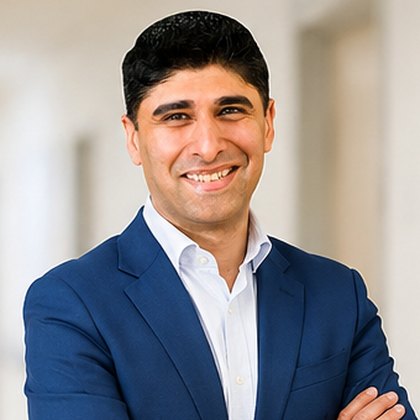
“I built the tool I wanted in my own clinic: quick to send, rigorous enough to stand up in court, and respectful of the patient's time and mine.”
Neville Dastur · Consultant Vascular Surgeon, NHS and private practice · Founder
Send in under two minutes. Patients read, ask and confirm they understand in their own time. You keep a sealed, independently verifiable record of what was discussed.
No new hardware. No app to install. Nothing for your secretary to learn.
“If this were ever questioned, could I show what we discussed?”
Pick the patient and template, add anything specific to them, send by email or show a QR code in clinic.
In their own time, on any device. Questions come to you in one batched email; your answers join the record.
A sealed PDF lands in the notes and with the patient. On the day, a QR code reconfirms it in seconds.
A signature on a form proves nothing about what the patient understood, and since 2015 that is the test. Paper never caught up.
Specialty templates carry the right risks, benefits, alternatives and leaflets. Choose, add anything patient-specific, send. Reminders, status and the signed PDF look after themselves.
Patients read in plain language, on their own phone, at their own pace. They can raise a question against any section and nothing is signed until every question is answered.
Every signed consent captures exactly what was shown, how long each section was read, which leaflet version was confirmed, and every question and answer, then seals it.
If a consent is ever questioned, the signed PDF is the evidence. It does not depend on us, our servers, or anyone's memory.
“The doctor's advisory role involves dialogue, the aim of which is to ensure that the patient understands.”
“I built the tool I wanted in my own clinic: quick to send, rigorous enough to stand up in court, and respectful of the patient's time and mine.”
Shared template libraries, delegate access for secretaries, organisation-wide reporting, and the documentation your information governance team will ask for.
Plans from a few pounds a month for an individual clinician. Everything included, no per-feature fees.